Mike Nygren

Essays on ordinary things, with candor, risk, and heart.

Mike Nygren: Author

The Ten Balloons. Principles of Leadership, Life and Love captures the spirit of what it means to take an intentional look at your life. This realistic approach to a balanced life is personal and practical in outlining steps for creating intentional purpose statements in ten areas of your life.

Mike’s story telling approach to life brings great inspiration and motivation in the areas of family, career, relationships, education, finances, health, and adventure. This multi-generational topic is designed for young people and adult audiences of all ages who like personal challenges.


Are New Year's Resolutions Really Necessary?

Are New Year Resolutions really necessary?

Some say yes. Some say no. Some don’t care.

I’m laughing as I write this because the second Friday of January passed last week—the unofficial day when people who once sort of committed to New Year’s resolutions quietly let them go.

Why am I laughing? Because it was fifty years ago that I first got serious about goal setting—often confused with resolutions. It wasn’t January. It wasn’t symbolic. It was a fall day when I sat in an all-day conference designed to inspire and motivate thousands of people to think differently about their lives.

And I took that day seriously—probably more seriously than it deserved. I didn’t know then that the thousands of people in that room were all hearing the same speakers through completely different filters. It didn’t take me long to figure out what some of my filters were: my personality, my ADHD, my introverted tendencies, being adopted, growing up in Brooklyn and on the East Coast, being married with two kids, and my impressive lack of musical or athletic coordination.

Add in a life devoted to teaching and coaching, and suddenly it made sense—whatever I became was always going to sound like me, move like me, and probably trip over itself once in a while too.

That day left me with three ideas that never really let go of me:
• One, only a small slice of people—maybe three percent—take goal setting seriously.
• Two, real goal setting isn’t about one thing, but about many parts of life.
• And three, I should never take myself too seriously.

Not because I lacked confidence, but because my brain never shuts up—always inventing, imagining, planning—and if that made me part of the three percent they talked about that day, I was going to enjoy the membership.

As teaching and coaching filled my life, I tried to give those ideas a shape people could see. I started teaching, in classrooms and small groups, the idea of picturing life as ten balloons—each one an area of living—and we get to decide how much air goes into each balloon. Some get fuller. Some stay small. And sometimes, just by living, one of them pops.

The more I paid attention to my own balloons, the more awake I felt. Not impressive—just awake. I noticed that most of the choices I made weren’t really about me anyway; they were about the people who happened to be near me—what the people at the conference called my sphere of influence. And somewhere along the way I realized I was wired for caring, giving, sharing, teaching, and coaching. Not heroically—just naturally. And one day I made a quiet promise to myself.

I wasn’t going to try to change the world.

I didn’t want a legacy, a spotlight, or a headline. I just wanted to look for the three percent—the people who were already paying attention to their balloons—and share what I’d stumbled into. Not as an expert. Not as someone to follow. Just as a regular person with no trophies, no dazzling résumé, no big money, and no special wisdom—just a life that kept handing me things worth passing along.

And that idea kept growing. I met all kinds of people—some I admired, some I didn’t; some I wanted to be like, some I didn’t—and each one quietly shaped how I saw myself.

That journey forced me to look inward. I realized I’m a risk-taker by nature, probably wired that way since my paper route and selling garden seeds door-to-door in the 1950s. But more than that, I discovered what really fascinates me: helping people become more interesting—and more interested—by widening their world, physically, mentally, and socially.

In my years of teaching and coaching, people often asked which of the Ten Balloons mattered most. Which one should they fill? Which one should they let shrink a little? I never had a clean answer. All I could ever say was, It depends.

It depends on the season you’re in.
It depends on the people around you.
It depends on what your life is asking of you right now.

It probably sounded like I was dodging the question, but the truth was I was still working it out in my own life. What once felt urgent sometimes faded. What once felt small sometimes grew.

I usually tell my running story to explain it.

For a season, I was a running coach and a road-running enthusiast. Sherri and the kids would travel with me to races in cities all over. One day Sherri said, kindly and clearly, that she loved being there, loved cheering, loved holding my sweat suit at the finish line—but she had no interest in running a marathon. Not soon. Not later. Probably not ever.

And that was the day it clicked for me. Some balloons matter deeply to me. They don’t have to matter to everyone. Owning that—without trying to sell it or defend it—made me better. Not faster. Not wiser. Just more honest about what fits me, and what doesn’t have to fit anyone else.

And so, whether it was New Year’s resolutions or goal setting, I knew my life would probably land somewhere on the Road Less Traveled—which meant I had to look at some of my balloons and just laugh.

Take hobbies. For some people, that means sports—playing them, watching them, planning life around them. I tried. But when the Brooklyn Dodgers left New York, they also took a piece of my childhood with them—Ebbets Field, hot dogs, and the idea that teams were loyal. Later, I sat in Yankee Stadium and watched Roger Maris and Mickey Mantle chase history. That should have sealed the deal. It didn’t.

Then I moved to Ohio, where choosing between the Cincinnati Bengals and the Cleveland Browns can determine your social life. I learned that allegiance matters. I also learned that mine just isn’t very strong. Professional sports became something I respect deeply in other people. If you love a team, I’ll cheer with you, complain about the refs, and celebrate the win. I just won’t build my future around it.

Politics turned out much the same. One day I looked myself up online and discovered I’d been labeled as belonging to a party I never joined. I was briefly offended—almost called someone official and indignant—then remembered I’ve always voted more for people and issues than banners. Friends have tried to recruit me for years. I disappoint them regularly. That balloon doesn’t get much air either.

Another area is faith. Although I grew up in one tradition, we’ve been part of several denominations over the years. I thought I had a pretty good grip on what faith looked like—until a sixteen-year-old girl quietly taught me more about faith and the Ten Balloons than anyone ever had.

I was coaching a group of Student Ambassadors at a career center, helping them prepare to visit local high schools and talk about the courses offered there. One day at lunch, I told her I had a question. I asked why, in all our time working together, she had never once suggested that I—or anyone else—consider joining her denomination, which was very different from my own background.

She smiled and said, “It’s simple, Coach. My dad taught me that I never need to worry about learning how to share my faith through speeches or testimonies. He always told me to worry about my actions. If people see something different in me, they’ll ask. And then I can tell them what they want to know.”

Those words, spoken twenty years ago, still feel fresh. They landed hard—in the best way. They reminded me that how I live matters more than how I explain how I live. And suddenly, the Ten Balloons made even more sense.

So why do I still set goals? Why do I keep talking about the Ten Balloons? Why do I write essays about them? Why do I invite people to join me in the pursuit of their own goals?

It’s simple. I like being around interesting people—people who are different from me, people who shine in areas I don’t, people I can learn from just by watching how they live.

And I like being around interested people—people who have a life beyond themselves, who are curious about new ideas, new beliefs, new ways of living.

That’s what New Year’s resolutions and goal setting offer me—not a system, not a sermon, but a pause. Time to dream. Time to notice. Time to celebrate what’s working, let go of what isn’t, and maybe—just one balloon at a time—decide whether it’s time to add some air, let some out, or finally, gently, let it pop.

And luckily, I don’t live by the world’s standard of the second Friday in January.
A Birthday Journey Across New York City That Defied All Logic

A Birthday Journey Across New York City That Defied All Logic

This essay is a blend of every part of me—my childhood love of drawing, the New York moments I collected with my grandmother, my hunger for adventure, my willingness to take a risk, and the Thanksgiving traditions that anchor our family.

We had all gathered in Manhattan to celebrate the holiday—and my birthday. The forecast promised cold and rain as Sherri and I stepped out of our hotel, flagged down a cab, and started what we believed would be a simple forty-block trip.

Sometimes the Road Less Traveled starts with something small—like a rising sense of fear over something that should have been simple. All we wanted was a traditional yellow cab with a meter, not an unmarked car with a vague promise of  about twenty dollars. So when a real cab pulled up within minutes, we relaxed. For about ten seconds.

Then I noticed we were headed the wrong way.

I know that part of Manhattan by heart, and within a few blocks my internal compass started shouting. I finally asked the driver why we were going downtown when we should’ve been going uptown. He assured me—cheerfully—that his GPS said the destination was three miles.
Three miles? The entire island is about ten miles long, and our destination was half a mile from the hotel. That’s when the mental anguish kicked in.

He offered to let us out. He offered to follow our directions. But the language barrier was working against us, so in a moment of panic and politeness we said the fateful words:
Just listen to Siri.

And with that, every block felt wrong. The street names weren’t familiar, the landmarks refused to appear, and the city outside the window started to look less like Midtown and more like a scavenger hunt we hadn’t signed up for. By the time we realized we were nowhere heading toward Central Park—one place every taxi driver should be able to find—we knew this ride was turning into something entirely different than a routine cab trip.

Forty blocks later, the situation went from confusing to disastrous. That’s when we finally realized why the city felt so unfamiliar: every street around us was barricaded for the Thanksgiving Day Parade. Overnight crews had already sealed off entire avenues, and one by one, each turn we attempted was met with a uniformed arm waving us away. Every denial added another ten blocks to this increasingly absurd detour.

The driver kept glancing back at us in the mirror with a look that hovered somewhere between apology and total bewilderment. And at that point, we did what any sane people would do—cut our losses. Let us out here, we said, almost in unison.

We paid the ridiculous fare—at this point it felt like a ransom—but stepping onto the sidewalk felt like freedom. Fifteen blocks still separated us from our destination, but at least now we were the ones choosing the direction.

Manhattan has a population of about 1.6 million people, and I was fairly certain we were about to meet at least half of them—their children, their dogs, their strollers, and their full-throttle New York attitudes. As we headed toward our destination, we were denied once again. This time the officers blocking the streets offered warm smiles and polite apologies, but absolutely no grace. The barricades might as well have been stone walls.

Earlier that week I’d read an essay by Andy Rooney, who joked that New Yorkers don’t just like to win—they have to win. At everything. Growing up in Brooklyn, I knew that truth by heart. And as Sherri and I stood at yet another closed street, scanning for the slightest weakness in the parade barricades, we realized this was our moment. If New Yorkers had to win, then so did we. It was time for Mike and Sherri to put that mindset into action.

And so we pushed toward the narrow opening in the barricade, police posted on both sides, hoping our determination might somehow count as permission. No such luck. We were told—firmly—that you needed an invitation to enter the viewing area where the giant Thanksgiving Day Parade balloons had been inflated throughout the day and were now on display.

An invitation? After all we’d been through? My heart didn’t stop, but it certainly tripped. We hadn’t traveled all the way from Ohio to be turned away by a technicality the size of a postcard. No paper, no balloons—simple as that.

We stepped closer anyway, just to hear the bad news straight from the source. And that’s when it happened. A man in front of us cheerfully presented his pass to the officer. In the swirl of pushing, shoving, and good-natured New York chaos, the officer asked him, Who else is with you?

Before the poor man could even inhale, I shouted, We are!

Pressed against his back like long-lost cousins, we followed him through. Somehow, miraculously, the officer let us pass.

We had made it. Or at least we thought we had.

Because just a few yards later—same street, same poor man leading the way—we ran into yet another barricade. Another officer. Another checkpoint. A full repeat of the entire New York performance.

This time, when the woman asked, Who’s with you? the man turned, looked right at us, smiled, and said, They are.

If we’ve ever had a God moment in our lives, this was it. It felt as if the gates of heaven had opened just wide enough to let this determined, slightly worn-out couple stumble through—two people who believed, against all evidence, that the impossible just might be possible.

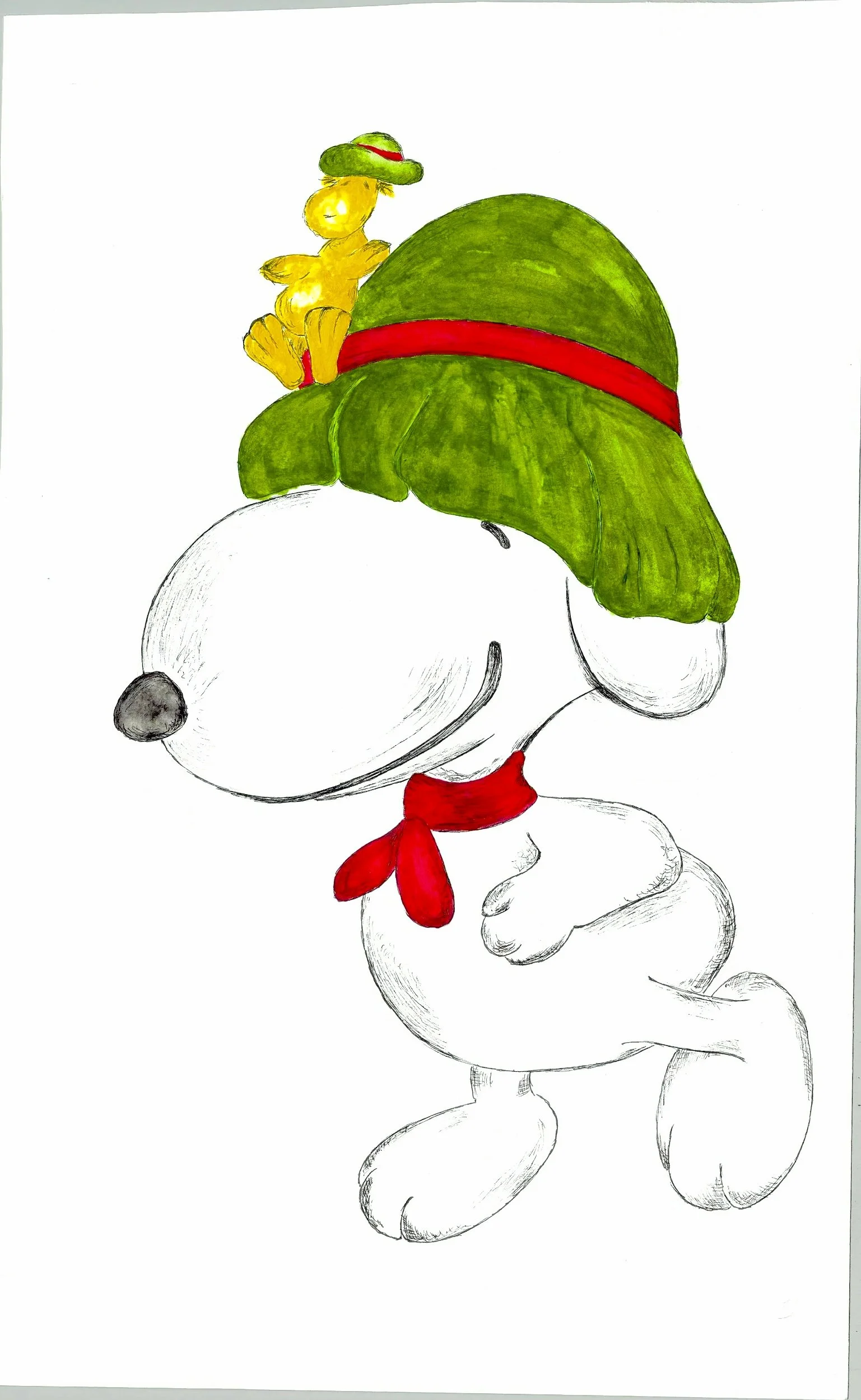
And there they were—balloons lined up in the street straight out of my childhood memories with Nana fifty years ago. Smokey the Bear led the parade, followed by new favorites: SpongeBob, the Pillsbury Doughboy, Snoopy—and some characters we didn’t even recognize.

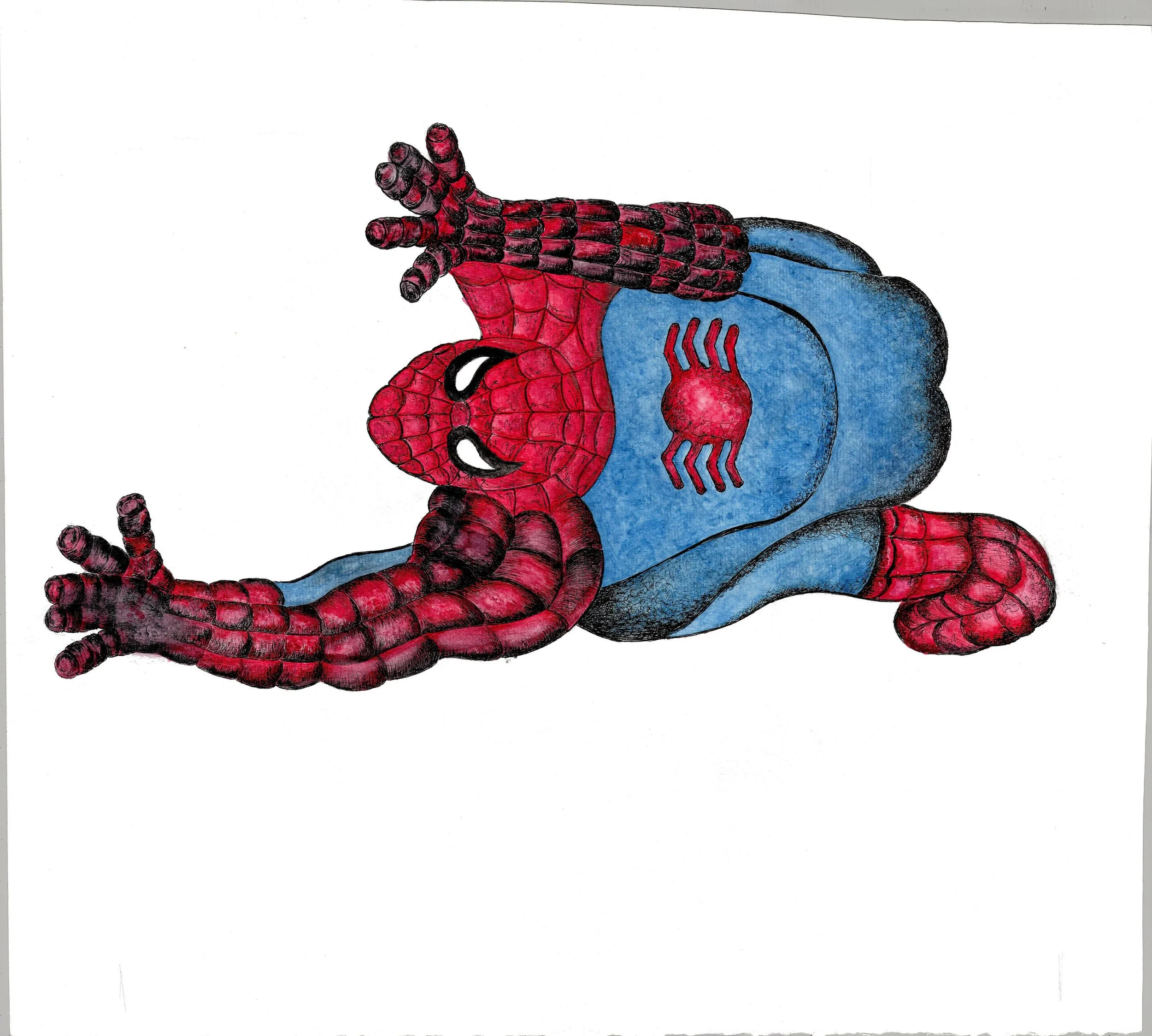
Then, as if fate itself had guided us, we arrived at the one balloon I had been waiting for: Spider-Man. I had studied him endlessly in my art room in anticipation of this parade, imagining this very moment. To many, it might have seemed a ridiculous dream—especially for a 78-year-old on his birthday—but there he was, larger than life, hovering in the street – awaiting morning. Spiderman. What a gift.

We wandered the avenue, back and forth, stopping for pictures, then stopping again just to take it all in. It felt like a private backstage pass to Disney World, or a VIP tour of the Super Bowl—magical, improbable, unforgettable. And as we finally stepped away, still smiling, hand in hand, it was time to hail a cab, head to dinner, and join our family. The adventure had reached its perfect, improbable ending—another memory on the Road Less Traveled, proof that life, even at this age, could still surprise, delight, and reward the willing.

To the men within 30 minutes of Tipp City, Ohio:

To the men within 30 minutes of Tipp City, Ohio:

Some of you may be wondering whatever happened to Mike after he quietly slipped into the “retirement season” of life a few years ago. The simple answer is this: I didn’t retire from caring—I just stopped wearing a name tag.

I still spend my time investing in things that matter. And right now, that includes a small group of men who are willing to pause once in a while and ask better questions about their lives.

We have two seats left.

It’s free.
It’s early (but not cruel). And you’ll still have about 357 days a year to sleep in.

This is not a program. It’s not therapy. It’s not a Bible study with fill-in-the-blanks. It’s just a group of men choosing to take time seriously.

I call the idea The Ten Balloons—a simple way of looking at the different areas of life and asking: What am I paying attention to? What have I ignored? What might need to change?

You don’t need to agree with anyone.
You don’t need to be “spiritual enough.”
You don’t need to have life figured out.

You just need to be honest, curious, and willing to show up.

No book to read. No curriculum to follow. No expert in the room (especially me).The conversation comes from whoever shows up.

We’ll meet early, one meeting in January (the 20th), two meetings each month: February, March, April and one closing meeting in May What’s expected (eventually): Beyond showing up, within the first month each of us will write a short mission statement for our own “Ten Balloons” and share it by email with the group.

This isn’t about fixing your life.
It’s about noticing it.

If you’ve felt the nudge to slow down, take stock, or begin again—this might be for you.

And if not? No pressure. No guilt. No awkward follow-up. Just an open door.

Logistics (for those still reading):
• First and Third Tuesday of the month
• 6:30–8:00 AM
• At my house in historic Tipp City.
• Bring your own coffee; refills and juice provided.

Email me mike@tenballoons.com to save a seat!

**********************************************

For those considering joining this group - here is an essay about it!

More Like You. Less Not Normal

An Invitation to Breathe, Notice, and Begin Again

I recently invited a small group of men to share in something I’ve done many times before—a simple kind of gathering for people who sense it might be time for a fresh start. Sometimes that start comes with a new year. Sometimes it comes with a new season of life. Sometimes it follows something harder: a career change, retirement, divorce, a health scare. And sometimes it comes for no clear reason at all—just the quiet feeling that you don’t want to walk the next stretch of life alone.

I began doing this kind of work back in the 1970s. I called it The Ten Balloons—not because it was complicated, but because it wasn’t. At its heart, it was a commitment to pause. To stop long enough to notice the habits you’ve been carrying, the routines you’ve been repeating, and the excuses you may have outgrown.

Not to judge them.
Not to fix everything at once.
Just to see them clearly.

Some people arrive because they want to change their lives. Others come because they want to understand the one they’re already living. Both reasons matter. Sometimes the bravest thing you can do isn’t move forward—it’s stop long enough to take a breath, look around, and say, “This is where I am.”

That pause has become rare. We live in a world that celebrates motion, productivity, and noise. But very little honors reflection. Very little gives permission to rest, reset, or simply say, I’m doing the best I can—and I’d like to do a little better.

When I first began this work nearly fifty years ago, it felt risky. Motivational speaker Zig Ziglar used to say that only three percent of people set goals in multiple areas of life—and are willing to talk about them. At the time, I didn’t believe that number. It felt too small, too pessimistic. But over the decades, I’ve come to think he may have been closer to the truth than I wanted to admit.

That’s what these small groups have always been for. Not a program. Not a performance. Just a space where people can take time seriously—time to listen, time to speak honestly, time to notice what still matters and what might be ready to change.

And over the years, the pattern has stayed mostly the same. Good groups. Honest effort. Real connection. But this year, I’m seeing it with new eyes—and noticing something else quietly rising to the surface, almost like a subtheme:

More like you. Less not normal.

Somewhere along the way, the world got louder and more divided. The news changed. Conversations changed. Even friendships changed. I don’t belong to a political party. I’ve never wanted someone else to do my thinking for me. I’ve always tried to listen carefully, read widely, and figure things out for myself.

But that has gotten harder.

Last year, I made a deliberate decision to be more careful about what I read, what I listen to, and what I watch. Not because I wanted to hide from the world—but because the past decade has been costly. Friendships have been strained. Trust has thinned. Every day seems to bring a new version of truth, and it’s harder than ever to know who to believe.

I’ve watched people of deep faith drift from scripture to popular opinion without quite realizing when the shift happened. And on many days, I’ve felt strangely alone—not because I lacked people around me, but because it felt harder to find honest, thoughtful conversation that wasn’t trying to win something.

That’s part of why these pauses matter more now than ever. Not to fix the world. Not to argue it into shape. But to give people a place where they don’t have to perform, prove, or pretend—just breathe, reflect, and remember who they are beneath all the noise.

Taking time to examine your own Ten Balloons is the doorway into this mindset. Not arguing. Not performing. Just honest conversations with yourself about your future—who you want to be, how you want to live and influence, and, most of all, what God might be asking of you in this season of life for the people within your reach.

Amen.

Winter Wishes with Nana

How One Grandmother Shaped a Life of Tradition, Adventure, and Joy

Winter arrived right on schedule in 1957—just the way my grandmother liked it. Nana believed cold weather made the city honest. She bundled me up as if we were heading for the North Pole, though our adventure was just a half-hour subway ride from her Bay Ridge apartment in Brooklyn to Macy’s on Fifth Avenue in Manhattan. But with Nana, even the simplest trips felt like expeditions.

For Nana, this day was a wish fulfilled. I was nine, a true New York boy, yet I had never seen the Thanksgiving Day Parade. My father wasn’t fond of crowds, but Nana refused to let that stop a tradition she believed every child should experience. She assured the family we’d be back in time for an early Thanksgiving dinner, issued a few instructions, and claimed the morning for just the two of us. Time together was her favorite gift.

Though probably in her sixties, I spent much of my childhood assuming all grandparents were at least ninety. Not Nana. She climbed four flights of stairs every day, still hoping someone might someday install an elevator. She moved with the steady spark of the Eveready Bunny—always in motion, always ready for the next memory she could create.

Looking back, I see how intentional she was—carefully shaping experiences she believed mattered, proud to guide me into a world she loved. Even then, I knew I was lucky. Not every child feels so fully seen and chosen.

As we headed toward the parade route, Nana detoured into what felt like a magical kingdom—Macy’s Department Store, proud sponsor of the festivities. Inside, I was swallowed by lights, color, and music. Santa’s elves hustled about, reminding us to return after the parade to welcome Santa and Mrs. Claus into their winter quarters. To my nine-year-old eyes, it was all perfectly real.

Outside, we joined the masses lining the streets. Nana had a knack for claiming the perfect spot—just enough space, just enough visibility, just enough magic. We weren’t only waiting for floats or marching bands. We were there for the balloons—the giants I had only ever seen in Sunday comics that I tried so hard to draw.

That year there were three: Mighty Mouse, Gorgeous Gobbler, and Spaceman. As a budding artist, seeing Mighty Mouse float above me—not sketched on paper but soaring in the sky—felt like a dream only Nana could have made possible.

Then the crowd shifted. Nana sensed it first. The noise softened, a hush moved forward like a wave, and then came the cheers—from both adults and children. She kept her eyes on me as Santa appeared, high above the crowd in his sleigh, waving as if he knew us personally.

In that moment, her wish was fulfilled. And for me, something clicked. I learned what every New York kid learned back then: Christmas didn’t begin when the calendar said so. It began the moment Santa reached Herald Square—like the ball dropping in Times Square on New Year’s Eve. It meant everything.

When Santa passed, we slipped back into our day as if nothing unusual had happened. On the subway headed back to 86th Street, I leaned into her warmth, tired in the best possible way. She bent down and whispered, Just wait until next year. It felt like a promise.

At home, the family was waiting—turkey on the table, dinner ready, questions ready, eager to hear every detail of our new tradition.

And Then… Christmas Break

True to her word, the next Christmas Break arrived with the same excitement. Nana packed fruit and sandwiches, bundled us even warmer, and led me back to the subway. But this time, our destination was completely new: Radio City Music Hall.

I had only heard whispers of its grandeur. The Christmas Spectacular with the 36 Rockettes was legendary, and somehow Nana decided it was time I experienced it.

Nana valued discipline. She always set high expectations for my behavior, especially on days like this. On the subway, she prepared me: there would be 5,000 people in line—stretching down the street—waiting for both the show and the movie afterward. (Ticketmaster hadn’t been invented yet.)

The barricades stretched endlessly. Thousands braved the bitter cold. Stepping into Radio City’s grand foyer left me speechless. Nicknamed the Showplace of the Nation and built in 1932, it was where I fell in love with Art Deco art and architecture—the stairways to four floors, the mirrors, the chrome and brass railings, the decorations, the music. The message was clear: when New York entertains, it does so with breathtaking generosity.

The show was spectacular. And afterward came Old Yeller, the timeless story of a dog who saves a boy’s life and becomes part of the family. But even more powerful was the realization that Nana had created something far bigger than a fun outing. She had planted a legacy—one that would ripple outward for decades.

Years later, reminiscing together, her smile carried all the joy of those early days. Traditions don’t just happen. They are intentional, purposeful, and—most of all—fun. That’s what she gave me.

Twenty-Five Years Later

Much later—sitting in our home in Ohio, in one of our last conversations—I thanked her properly. I told her how her high expectations shaped me into a better person, how her belief that I could go to college, succeed, and simply be a good human had carried me through life. We laughed, we cried.

Then I shared how her legacy continued through my children, grandchildren, and our many adventures and memories of New York City—the Thanksgiving Day Parade, Radio City, and beyond.

She had always been excited about my work as a youth leader. I told her about the groups of students I’d taken on Christmas-in-New-York trips—not just for the parade or the Rockettes, but for the Rockefeller Center tree, the lights, the food, the crowds—the culture. A culture that begins early, grows with experience, and continues through Winter Wishes for people of all ages.

Only then did I realize how many lives she had unknowingly touched.

Sixty-Eight Years of Legacy

Sixty-eight years later, Nana’s traditions and values continue to shape my life. Hundreds of teens and adults—and my own family—have traveled with us to experience New York. My unspoken goal has always been simple: that they fall in love with the city and its culture the way I did.

A postscript: This Thanksgiving in 2025, ten of our family members will return to New York City. We’ll watch the balloons inflate on Wednesday evening, wake up for the parade and the thousands joining us to welcome Santa, visit Radio City, enjoy favorite restaurants, ride the subway, walk and walk—and for a few days, reconnect with the memory of Nana.

This year, my personal artwork features Spider-Man (pictured below) —yes, we’ve come a long way from Mighty Mouse—but the heart of the tradition remains: embracing change while honoring what should never change.

Her Winter Wishes live on—carried forward in every laugh, every adventure, and every life she quietly touched.

Historic Doorways On Main

Historic Doorways of Main Street: A Sketch Series

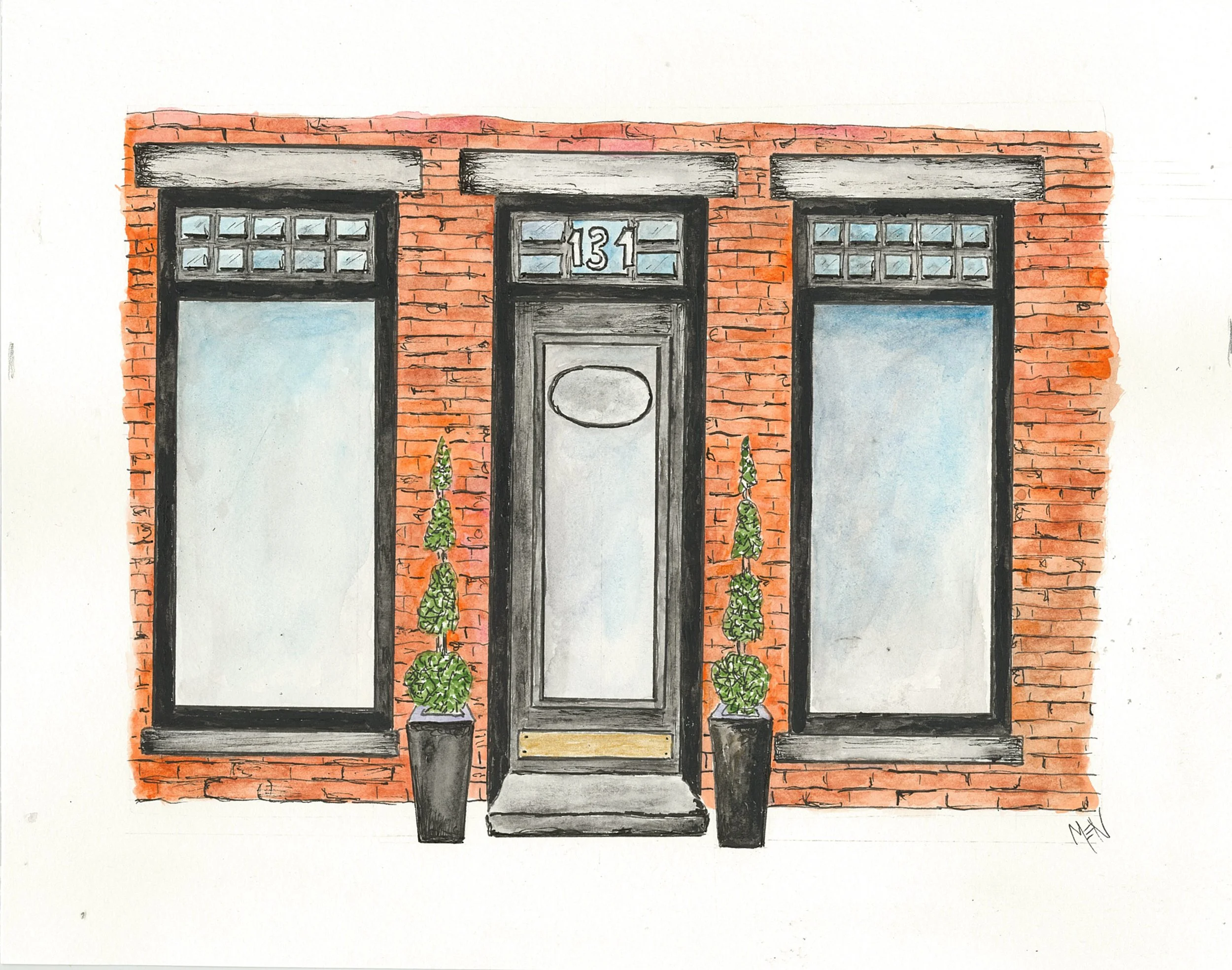
This collection of nine doorway sketches captures the architectural character of my hometown’s Main Street—one drawing at a time. Each doorway tells a quiet story of design, function, and the people who built, owned, or passed through these spaces over the years. I chose not to include addresses or detailed descriptions, inviting viewers—especially those familiar with the community—to pause, look closer, and maybe notice what’s usually overlooked. These doors aren’t just entries into buildings—they're entries into our shared history. This series reflects my mission: bringing history to life through art, architecture, restoration, and storytelling—and reminding us that sometimes, the everyday structures around us are more extraordinary than we realize.

Contact mike@tenballoons.com