Hiking The Grand Canyon In Retirement
It is ten hours away from the one-week anniversary of coming face-to-face with an uninsured pickup truck, a pain story like no other, and most importantly, a word called trauma—a word I never gave much thought to ten days ago.
I am writing this in the wee hours of the night because I have discovered that trauma has no timeline. There are no clear beginnings and endings. The brain is a far more curious thing than I once imagined, so I write before I may potentially be faced with pain.
Three nights ago, I was awakened by pain and tears, even after a good day of writing, drawing, conversations, and believing that I was on the road to recovery at a respectable speed. The next night, only half the areas of my body reached that same level of pain, and even then for a shorter period of time.
I never understood the value of painkillers until this week.
Yesterday ended well. I showered by myself, managed the pain all day, received new bandages on my two remaining cuts, and discovered one new area of seatbelt swelling that I had not yet experienced. Oddly enough, it helped me realize that trauma has no roadmap. The body and the emotions may be best friends or greatest enemies. Some days it is difficult to tell.
But now the great adventure begins.
The retirement book is all about conversations concerning the potential of retirement—more time to think, learn, study, and hopefully not return to who you were, but instead take your passions, dreams, and experiences into a new season and a new form.
So Mike the Adventurer wakes up at ten o'clock, alone in my downstairs suite—a room that could compete with any home interior magazine. One floor away are Sherri and Scout.
For the first time in days, I am totally alone.
After more than 150 hours of hospital staff, monitors, machines, visitors, interruptions, and activity, the silence feels almost luxurious. Extreme introverts like me learn how to live around people. We learn when to be present and engaged, but we also cherish time alone, time to process, and time to talk with ourselves. And yes, a nonstop brain that is now trying to make sense of all that is happening within it.
So the ten o'clock welcome call from within was appreciated.
Clean. Rested. Minimal pain considering the broken ribs and sternum irregularities. I began with about an hour of simple stretching exercises, using only the muscles willing to cooperate. My normal life includes three or four days each week at the YMCA doing basic aerobic and strength exercises. No powerlifting. No marathons. Just trying to be as fit as a seventy-nine-year-old can be who still works at it.
As the stretching continued, my energy and attitude began to soar. Blood flowing. Heart pumping. Yet still sitting in bed. Following doctor's orders to the best of my ability. Earlier in the week, I thought about giving myself some sort of award for actually following the advice of the dozens of doctors and nurses who had opinions about recovery.
Then came the Mike Nygren moment.
Feeling hungry after a week of not wanting much food, I imagined the refrigerator thirty feet away around the corner. Would it be possible to get there? Without waking the upstairs care team. Without hidden cameras. Without secret monitors. My mind raced.
This might someday belong on my list of accomplishments from my seventies.
The hundred-mile bike ride. The 1.2-mile swim I somehow survived. The marathon. The mission trips. The painting projects. Would this thirty-foot expedition qualify? The answer from my internal committee was a resounding yes. Should I crawl? Take the luxury wheelchair? Or simply shuffle to the kitchen with my borrowed walker?
Before any expedition comes planning.
How do I avoid falling? How do I avoid undoing a week of recovery? I wanted food. I did not want a setback. Then inspiration arrived.
A pillowcase.
What could be carried in a pillowcase hanging from a walker? Quite a lot, as it turns out.
The wheelchair seemed unnecessary. Navigating doorways at midnight felt more complicated than the mission required. As someone who once planned youth trips and adventures months in advance, I felt ready.
My strength was good. No dizziness all week. Thirty feet and a few doorways seemed entirely manageable. Or perhaps more accurately, a walk through the William Ashworth Estate.
And so I began. It was one hundred times easier than expected. No surprise pains. No hidden obstacles. Clean socks. Dim lighting. A clear path.
When I reached the kitchen, I knew I had made the right decision.
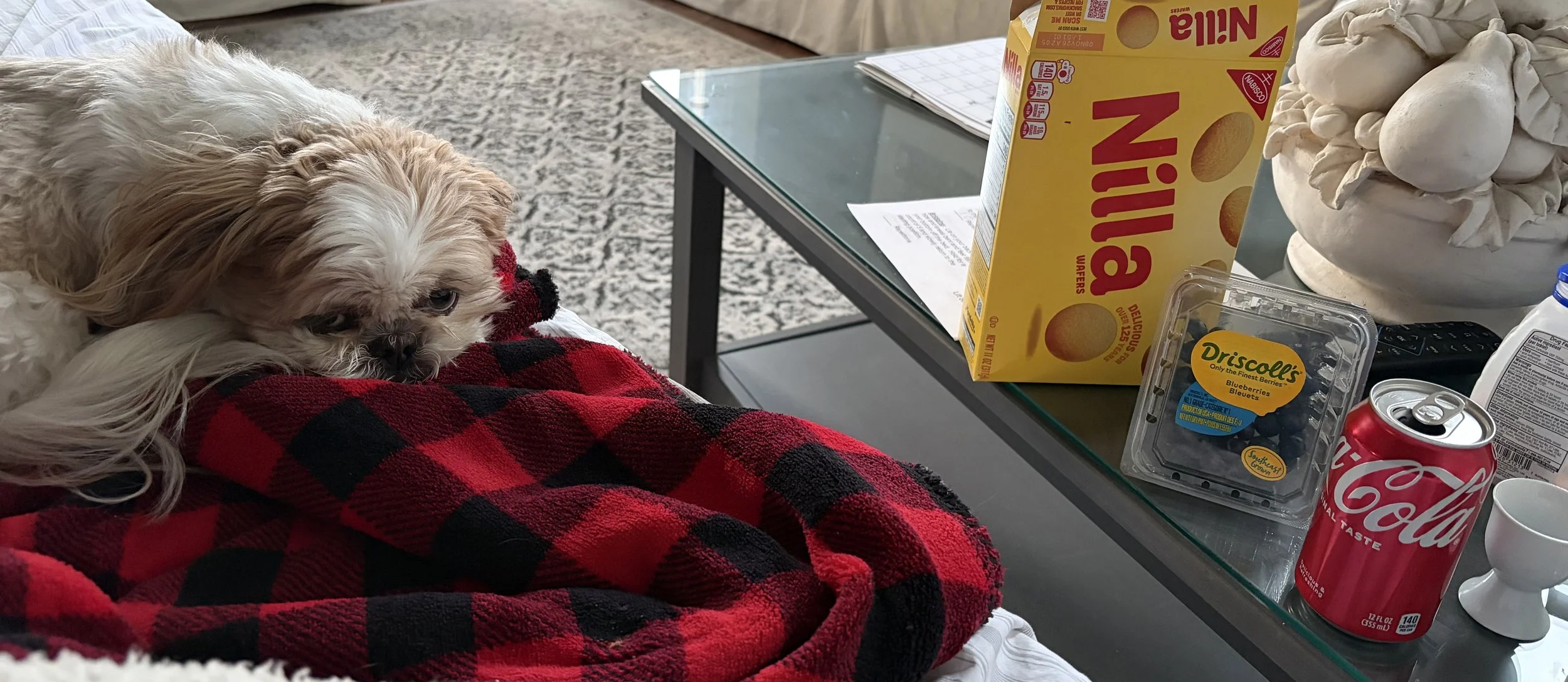
The food closet was within reach. A box of vanilla wafers. A carton of blueberries. A Coke. I smiled as I packed my supplies into the pillowcase. I paused for a moment to appreciate the scenery and the sound of the garden fountain outside.
I had always dreamed of climbing out of the Grand Canyon. Instead, here I was standing in my kitchen. Funny how perspective works. I did not need to catch my breath. I did not need to readjust the walker. I did not need to rest. I was ready for the return trip.
Perhaps it takes trauma to appreciate this story, but a week of confinement for me feels more like a year. The return journey was simple. Short. Safe. Manageable.
I have spent years watching others navigate retirement and observing the dangers and consequences of falls. One of my life mission statements has always been simple: Learn whatever I have to learn to do whatever I want to do.
Tonight, that philosophy was being put into practice. I was cautious. Inch by inch. Not foot by foot. Thinking ahead. Shuffling along. Joyfully.
Probably much like America's first astronauts bouncing across the moon. Only this time it was not one giant leap for mankind.
It was one careful shuffle for Mike.
And so, among all the promises retirement offers—new adventures, new destinations, new dreams—here I was. A man with a walker. A pillowcase. Some vanilla wafers. And a Coke.
Laughing at himself before anyone else had the chance.
And grateful to have made it safely out of the Grand Canyon and back to bed. Awaiting whatever this trauma journey might look like next.